Timber or Composite Fencing? How to Choose the Right Fence for Your Irish Garden
A garden fence might seem like a small detail, but it can completely change how your outdoor space looks and feels.
It provides privacy, creates a secure boundary for children and pets, and gives the entire garden a more finished appearance.
But in Ireland, choosing the right fencing involves more than picking a colour or style. With frequent rain, strong winds and changing temperatures, the material you choose can make a real difference to how your fence looks in a few years.
So, is traditional timber fencing still the best option, or is composite worth the extra investment?
Let’s look at what homeowners should consider before making that decision.
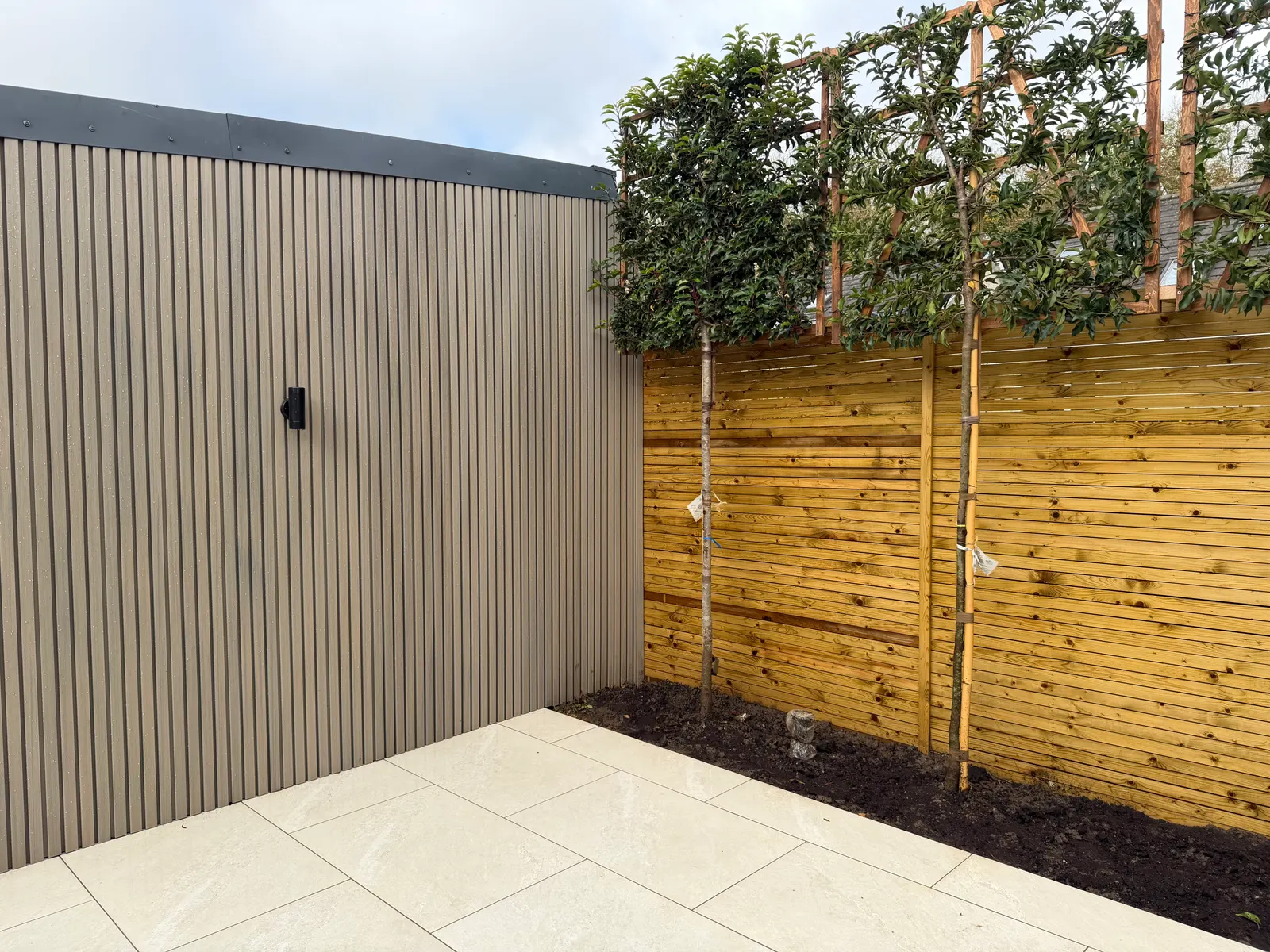
Timber fencing remains a popular choice for gardens across Dublin and surrounding counties.
It works particularly well with natural lawns, planting beds and traditional garden designs. It is also generally more affordable upfront than composite fencing.
Another advantage is flexibility. Timber can be stained or painted in different shades, allowing homeowners to update its appearance without replacing the entire fence.
However, there is something many people don’t realise when installing new timber fencing.
Pressure-treated timber can still change colour over time.
Even when the wood has been treated to resist decay, exposure to sunlight and moisture can cause the surface to become grey or weathered.
Without proper care, some fences can also develop dark staining, algae or surface mould, particularly in shaded, damp areas.
A little maintenance can make a big difference.
Most fence treatments require suitable temperatures and a dry weather window. Trying to stain wet timber during an Irish winter can lead to disappointing results.
Timber can remain an attractive and practical option for years, but it is worth considering the maintenance before choosing it.
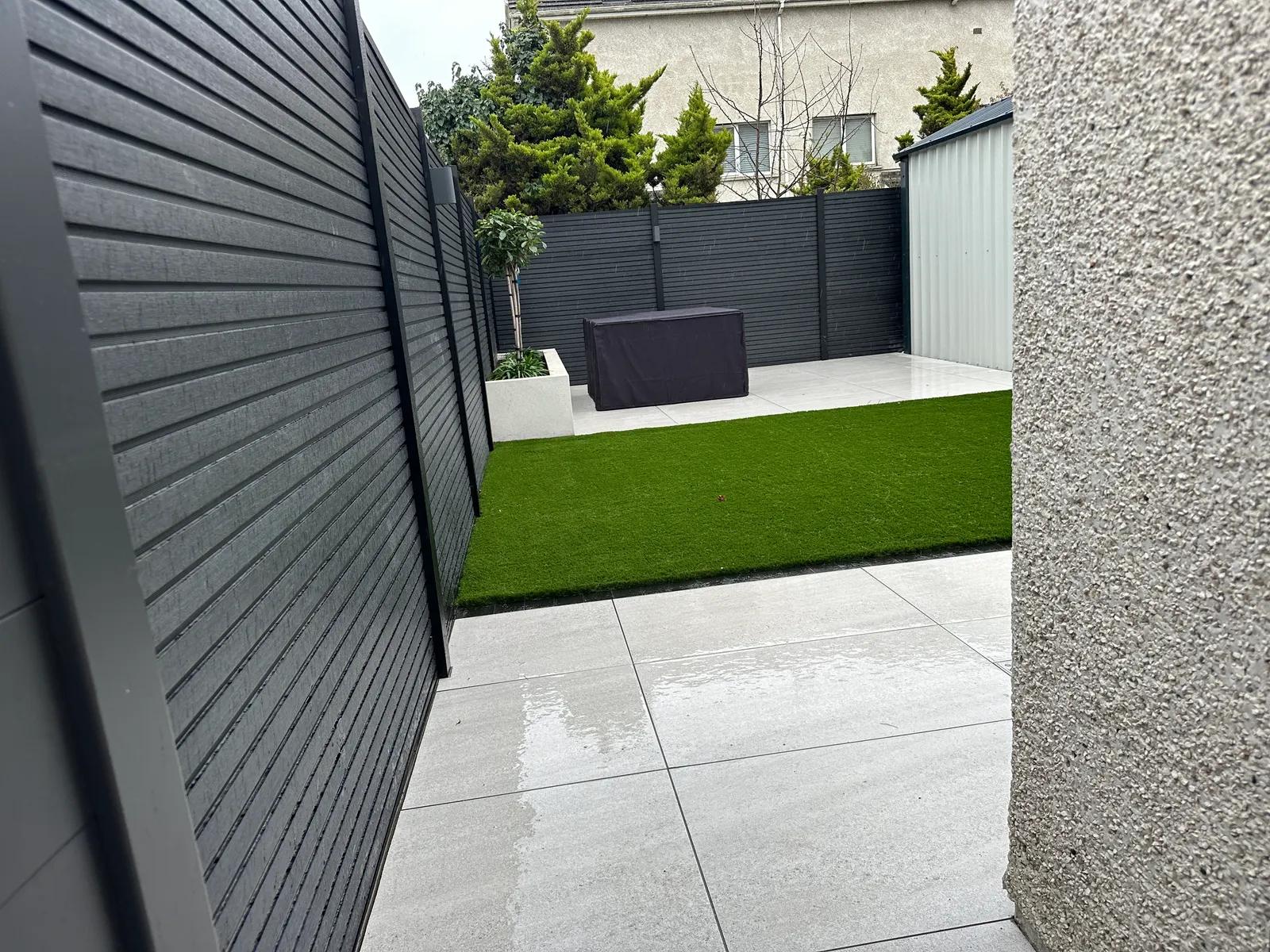
For homeowners who prefer a modern finish without regular staining or painting, composite fencing is worth considering.
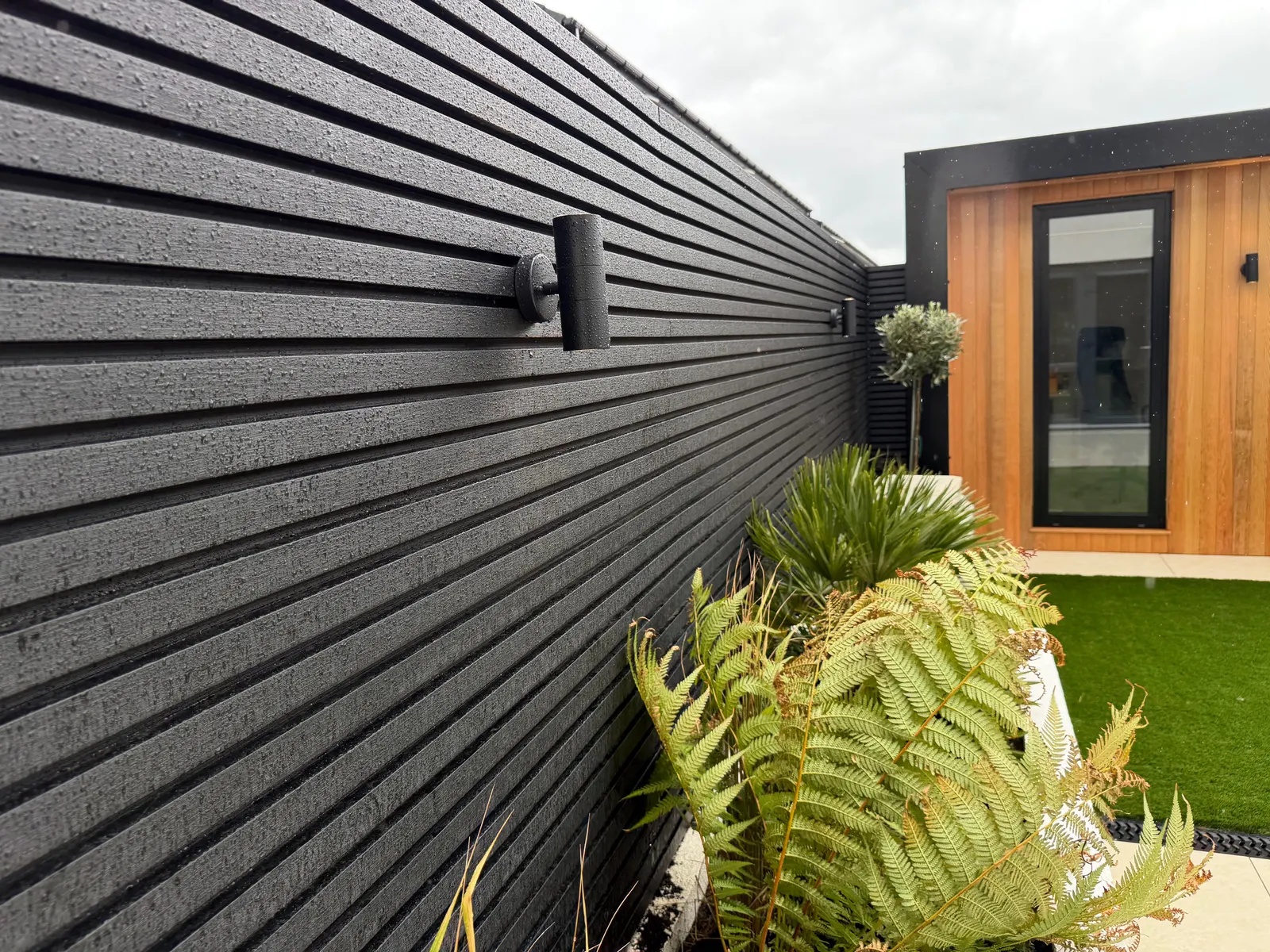
Composite boards are generally made from a combination of wood fibres and plastic materials, designed to offer a durable alternative to traditional timber.
One of their biggest advantages is how little routine maintenance they need.
Unlike natural wood, composite boards do not require regular wood-preservative treatments. An occasional clean is usually enough to remove surface dirt.
Composite fencing is also available in a range of contemporary colours, including charcoal, grey and natural wood-effect finishes.
Of course, no outdoor material is completely maintenance-free. Composite products can still collect dirt, show weathering or experience some colour change over time, depending on their quality and exposure.
The main drawback is the higher initial cost.
However, for homeowners who want to spend less time maintaining their garden, that extra investment may be worthwhile. The same trade-off applies to walls and garden rooms, as we explain in our guide to composite vs timber cladding.
Privacy is often the first reason homeowners consider replacing their existing fencing, particularly in new-build developments where neighbouring gardens sit close together.
But choosing the tallest or most solid-looking panels isn’t always the best solution.
A fence also needs to withstand the weather.
In exposed gardens, solid panels can catch considerable wind. The strength of the posts, foundations and overall installation is just as important as the fencing material itself.
Before installation, it is worth thinking about:
A well-designed fence should work with the rest of the garden rather than becoming an afterthought.
This is something we always recommend considering early in the planning process.
If you are planning a full garden makeover, it often makes sense to agree the fencing layout before installing new paving, artificial grass or planting beds.
Why?
Because replacing fence posts or changing boundary levels later could mean disturbing newly finished areas.
For example, if you’re planning porcelain paving alongside a new fence, the finished levels, drainage and fence foundations should be considered together.
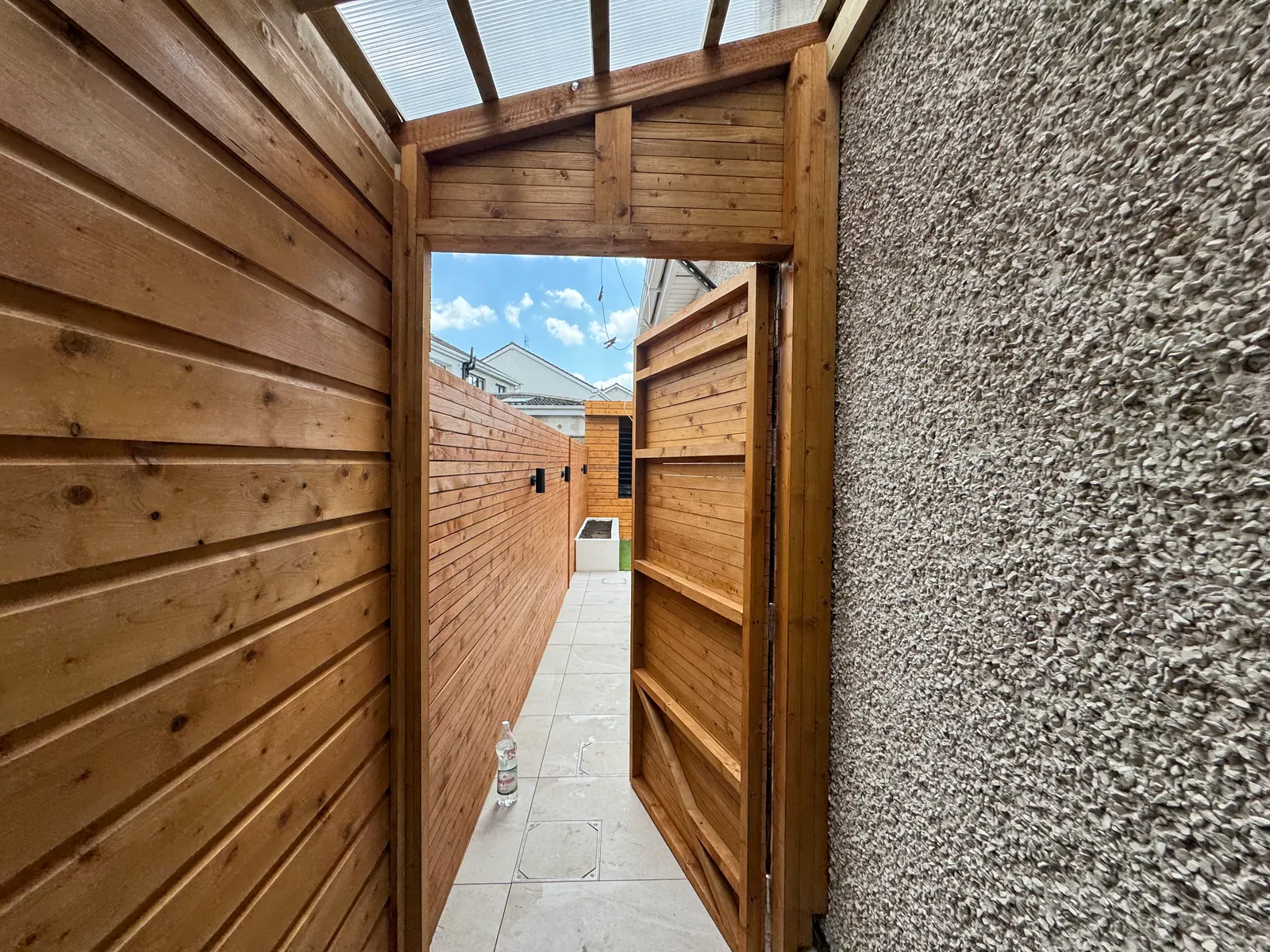
The same applies to raised flower beds, garden lighting and side gates.
Planning these elements as one project can help avoid unnecessary work and additional costs.
There isn’t one perfect fencing material for every garden.
Timber fencing may be the better choice if:
Composite fencing may be the better choice if:
The quality of the materials and installation will matter whichever option you choose.
At HomeZone Garden, we supply and install both timber and composite fencing, helping homeowners choose a solution that suits their property, style and budget.
Whether you need new boundary fencing, a matching gate or fencing as part of a complete garden makeover, our experienced in-house team can take care of the project from preparation to installation.
We work across Dublin, Kildare, Wicklow, Meath and surrounding areas.
Thinking about upgrading your garden fencing?
Send us a few photos of your garden and tell us what you’re planning. We’ll help you explore the options and provide a free, no-obligation quotation.
Explore our fencing services or contact HomeZone Garden.
Planning a garden project in Dublin or surrounding areas? Contact HomeZone Garden and send us a few photos of your space.